
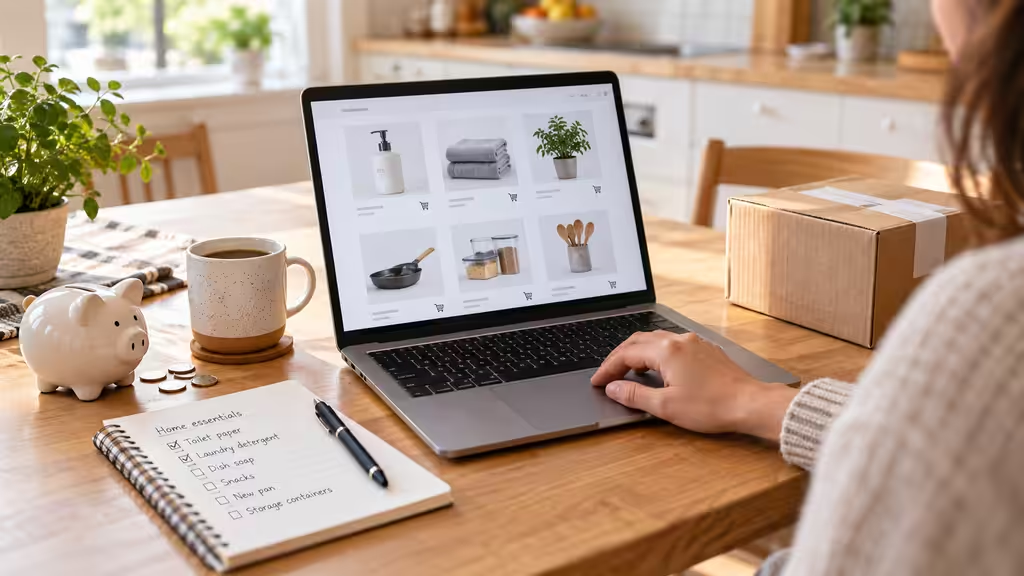
You don’t have to give up the things you enjoy to spend less. A few simple shopping habits can help you pause, compare, and choose the deals that fit your real life.
Whether you’re browsing online, checking out Amazon finds, picking up household basics, shopping for gifts, or stocking up on everyday favorites, these small habits can help your money go further.
1. Make a list before you shop
A list keeps a quick “I’ll look for one thing” moment from turning into a cart full of extras.
Before you shop, write down what you need: groceries, household items, personal care products, kids’ items, pet supplies, gifts, or seasonal must-haves.
Shop from the list first. If you spot a fun deal, save it to a wish list and pause before checking out. A little breathing room can save you from regret spending.
2. Use the 24-hour cart rule
If it’s not urgent, leave it in your cart or on a wish list for 24 hours.
This works well for clothes, home decor, gadgets, beauty items, and random online finds. If you still want it the next day and it fits your budget, you can feel better about buying it. If you forget about it, that’s money saved.
A bargain isn’t a bargain if you didn’t need it, won’t use it, or bought it because a countdown timer made you panic.
3. Compare the price per use, not just the price tag
The cheapest item isn’t always the best deal. A $12 kitchen tool you use every week can be a better buy than a $5 item that breaks after two uses.
Ask yourself: “How often will I actually use this?” Think about durability, care, and any supplies or replacements it needs, too. That can help you separate smart buys from clutter.
For everyday consumables, compare the unit price—such as the price per ounce, sheet, or load. A bigger package only helps if you’ll use it and have room to store it.
4. Check for coupons—and compare the final total
Before you check out, do a quick savings scan for digital coupons, promo codes, cash-back offers, store rewards, subscription discounts, and bundle deals. Check the terms, eligibility, and expiration dates for any offer you plan to use.
Compare the total you’ll actually pay, including shipping, taxes, and any required fees. Check the return window and whether you would have to pay return shipping or a restocking fee. A lower sticker price can cost more in the end.
Don’t add something you don’t need just to reach a free-shipping threshold. Compare the shipping charge with the cost of the extra item first.
For household basics you already buy regularly, a subscription offer may be useful. Review the current price and delivery schedule, and set a reminder before the next order. An introductory discount doesn’t guarantee the same price on future deliveries.
5. Shop your home first
Before buying storage bins, pantry items, beauty products, school supplies, or cleaning products, take 10 minutes to check what you already own.
Look in closets, pantry shelves, bathroom cabinets, laundry room shelves, the garage, desk drawers, and under the sink.
You may find unopened shampoo, extra notebooks, batteries, gift wrap, candles, or cleaning supplies you forgot about. Check condition and expiration dates where relevant.
Shopping your home first is one of the easiest ways to save money because the best deal may be the one you already paid for.
6. Set a deal budget
Deals are fun. Surprise spending is not.
Try setting a weekly or monthly amount for extras like online finds, gifts, seasonal decor, beauty items, or little treats. Choose an amount that fits after your essentials and other priorities—even if that means skipping extras this month.
When the deal budget is gone, pause until next time. This keeps shopping fun, not stressful.
7. Buy off-season when you can
Seasonal clearance can be worth checking when you already know you’ll need something later. Think holiday decor after the holiday, swimsuits near the end of summer, or patio items after peak outdoor season.
You may not always be able to wait, and clearance doesn’t automatically mean the lowest price. Compare prices, check the return policy, and think about storage space and whether the item will still fit your needs next season.
8. Enjoy freebies and giveaways as a bonus
Free samples can help you try a product before spending money on the full-size version. Look for offers from brands and sources you trust, and read what’s required before signing up.
Giveaways can be a fun extra, but winning is uncertain. Treat them as entertainment rather than savings you can count on, and check eligibility, entry rules, and closing dates.
Be cautious about requests for payment or sensitive personal information, especially in unexpected messages claiming you’ve won. Consider what information an offer asks you to share and whether the sample is worth it to you.
9. Ask smart questions before you buy
Before you hit checkout, ask yourself:
Do I need it—or have a clear use for it? Will I use it soon? Do I already own something similar? Have I compared the total cost? Does it fit my budget?
Your answers can help you decide whether to buy, wait, or skip it. That small pause can turn impulse shopping into intentional spending.
Start with one small habit
Saving money doesn’t mean never buying anything fun. We all deserve nice things—and a little breathing room in our budgets.
Pick one tip from this list and try it the next time you shop. Your budget doesn’t need perfection. A plan, a pause, and a few smart habits can make a difference over time.
Save this for your next shopping trip, or share it with a friend who loves a good bargain and wants to spend smarter.
Have a shopping tip or a question? Share it below! Please be kind, stay on topic, and leave out sensitive personal information or spam. Comments are reviewed before appearing.